
Discovery to checkout
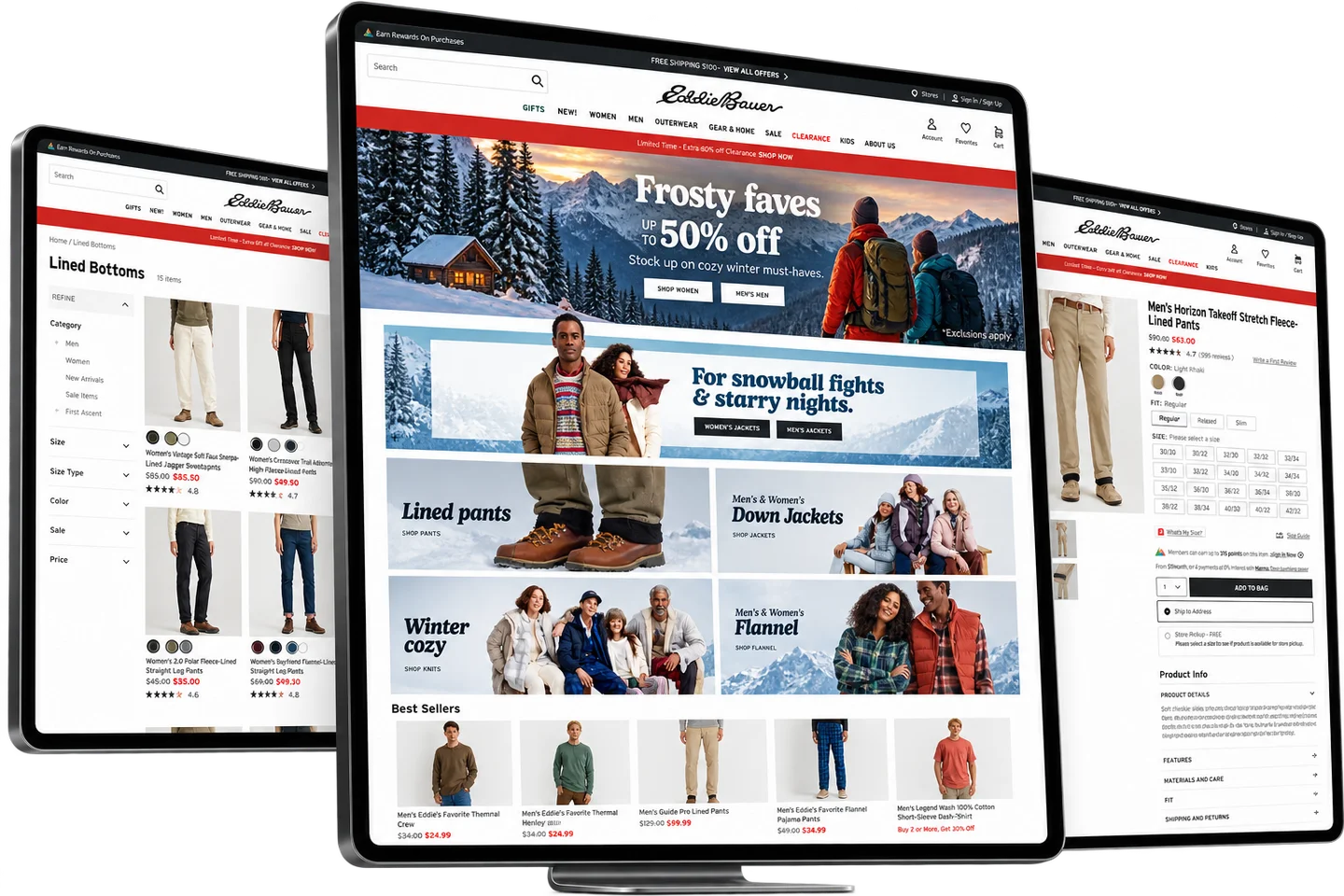
The retail flow runs from product discovery through to checkout entry.
Retail interface | Shipped product
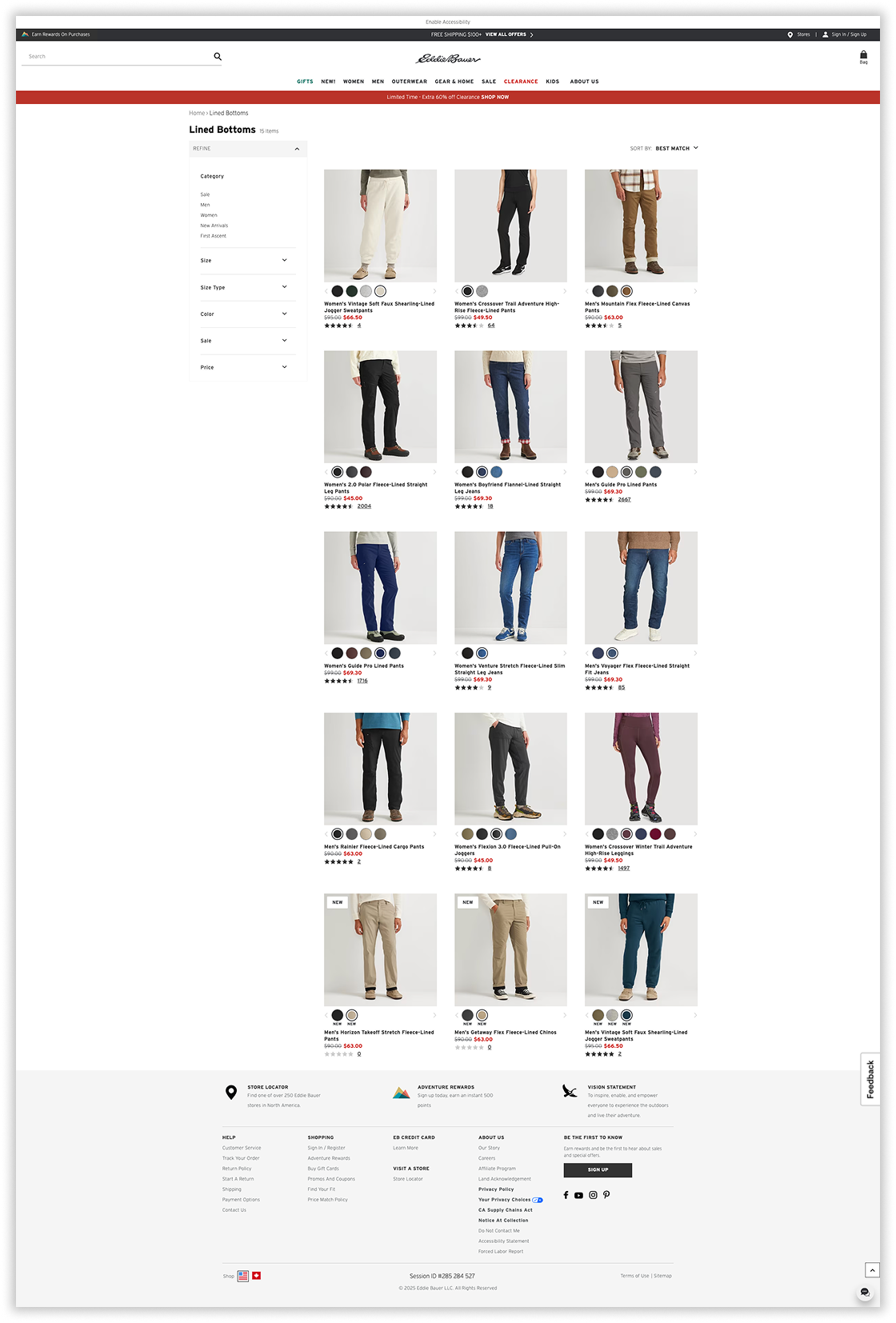
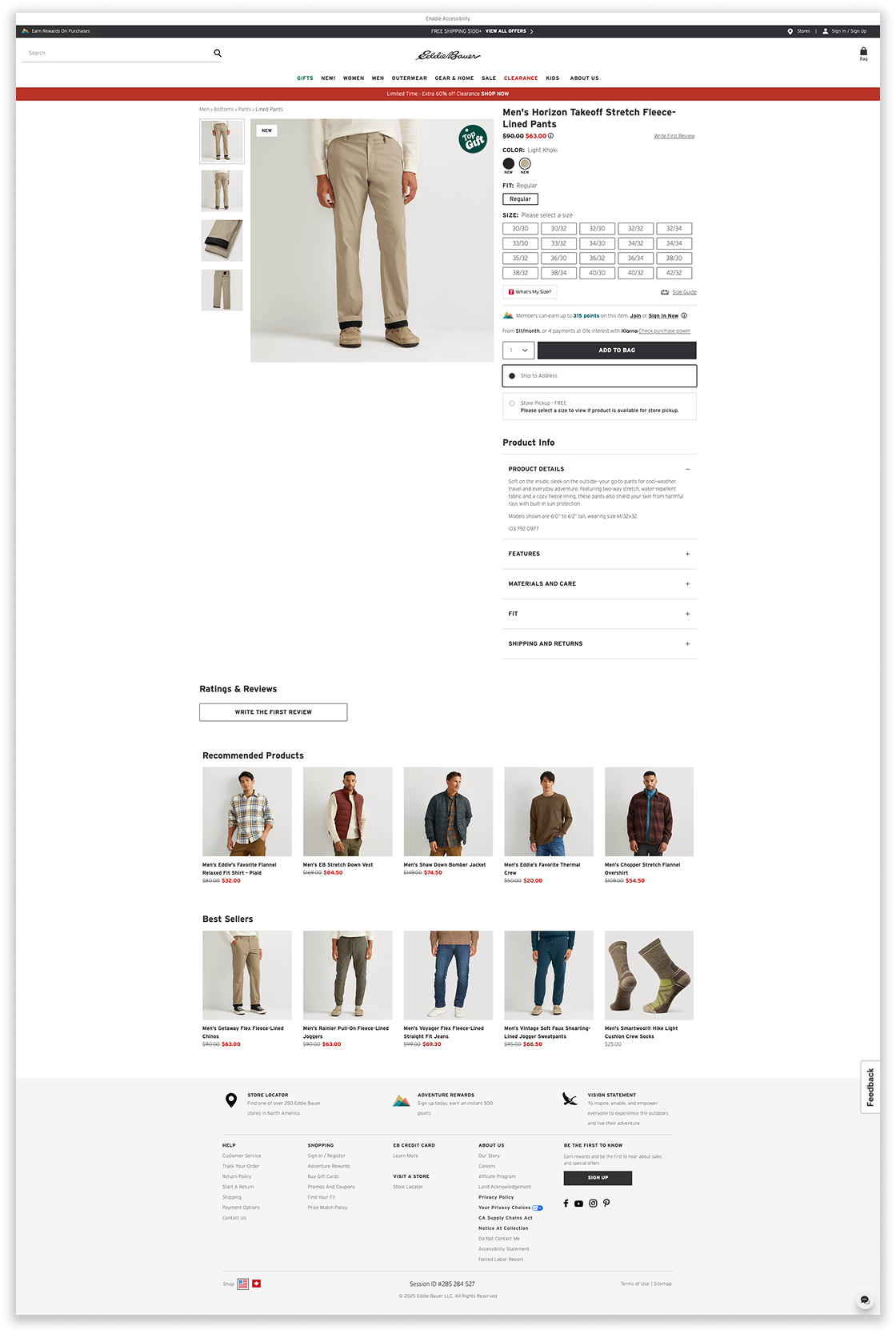
I designed the path from storefront and product listing through product details, the shopping bag and checkout.
PROJECT AT A GLANCE
KEY DESIGN DECISIONS
How I structured the journey from browsing to checkout.
The retail flow runs from product discovery through to checkout entry.
I split checkout into shipping fields, payment fields and the order summary, so each group reads on its own.
Product detail brings imagery, variant choice and the purchase action into one view.
Each of these decisions shipped in Eddie Bauer.
How does product information carry from selection into the bag and checkout?
I designed these areas of the product:
How the shipped screens connect.
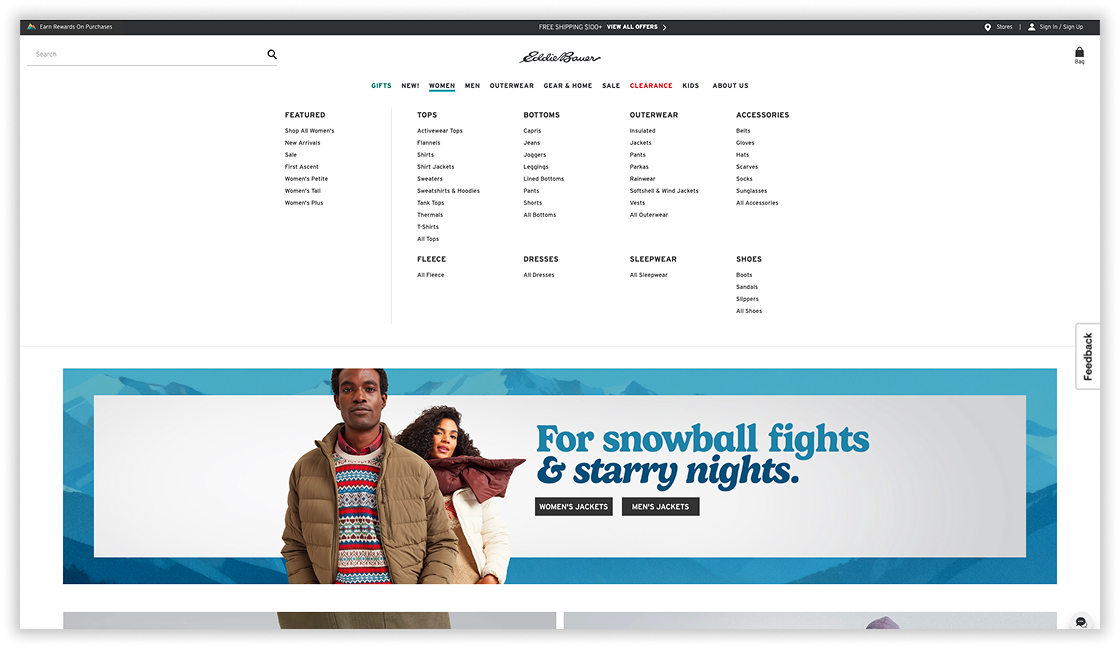
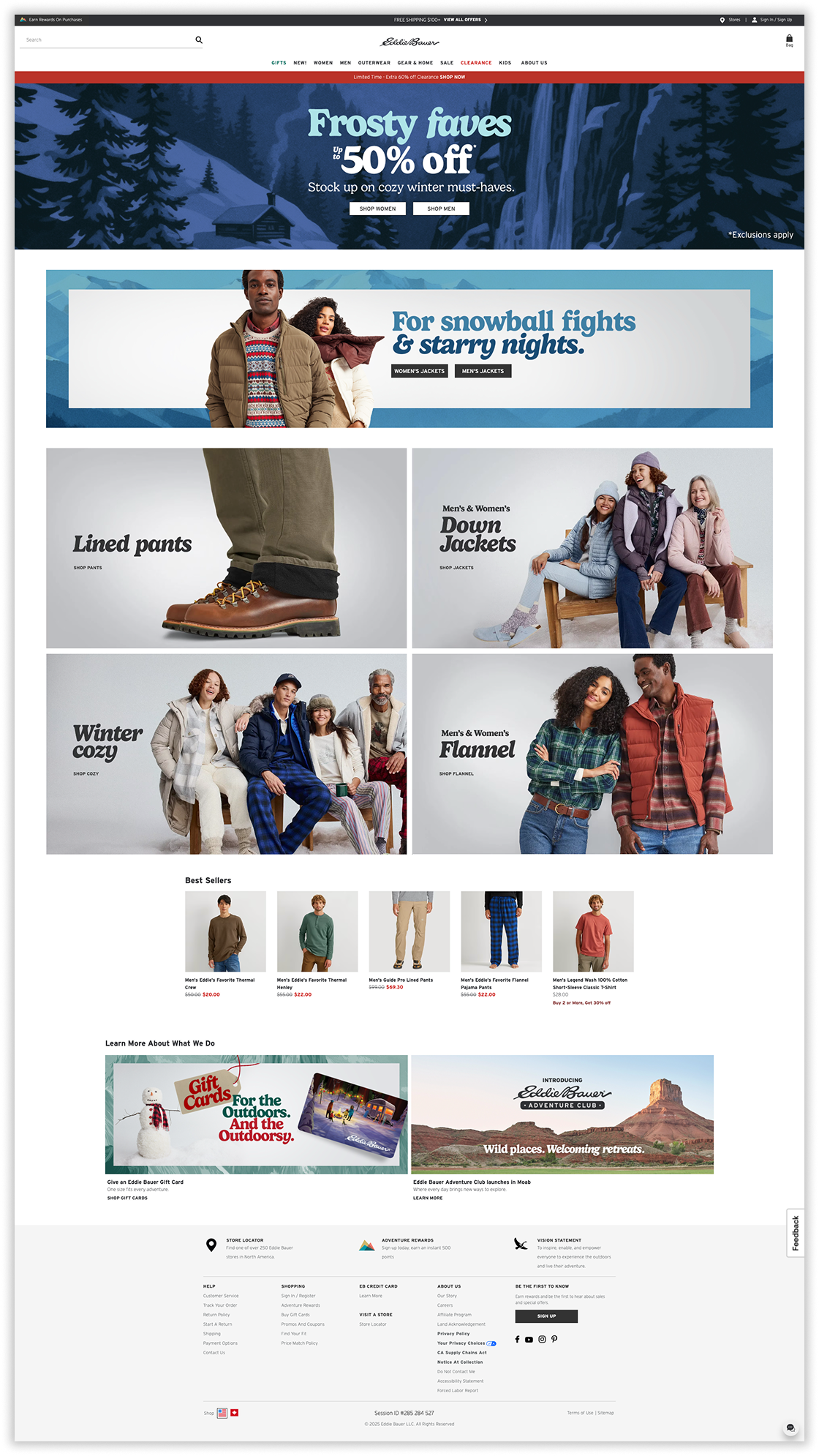
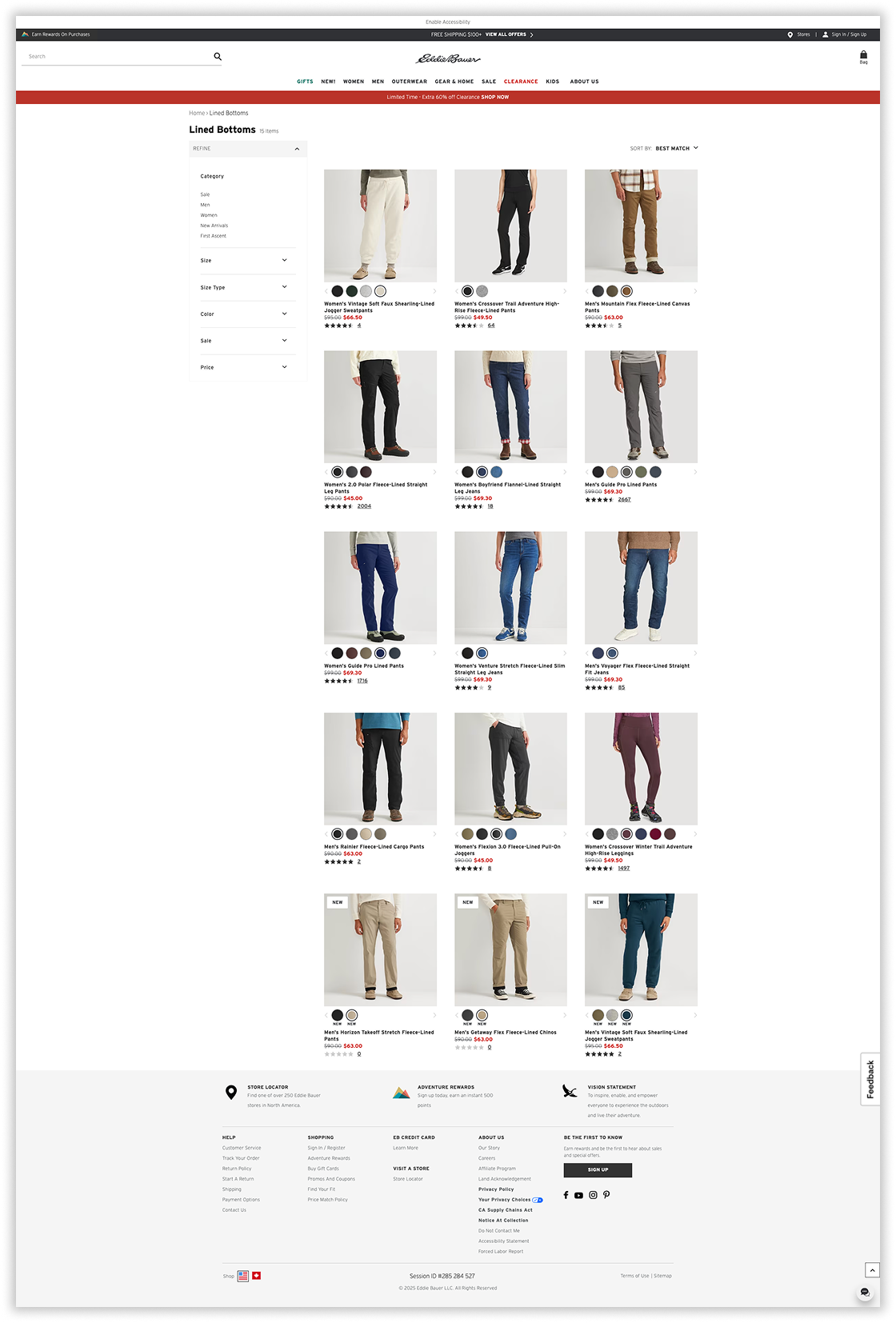
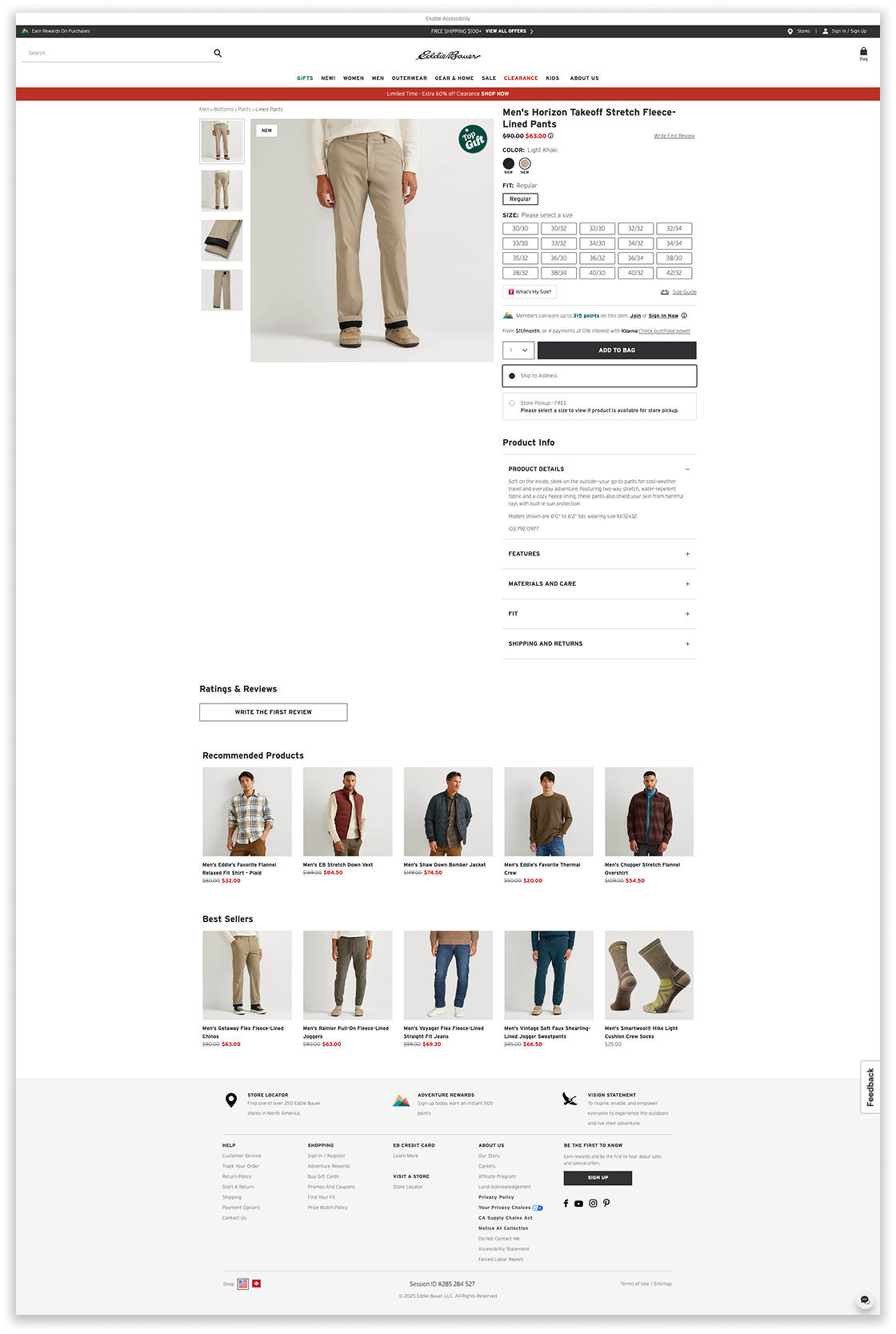
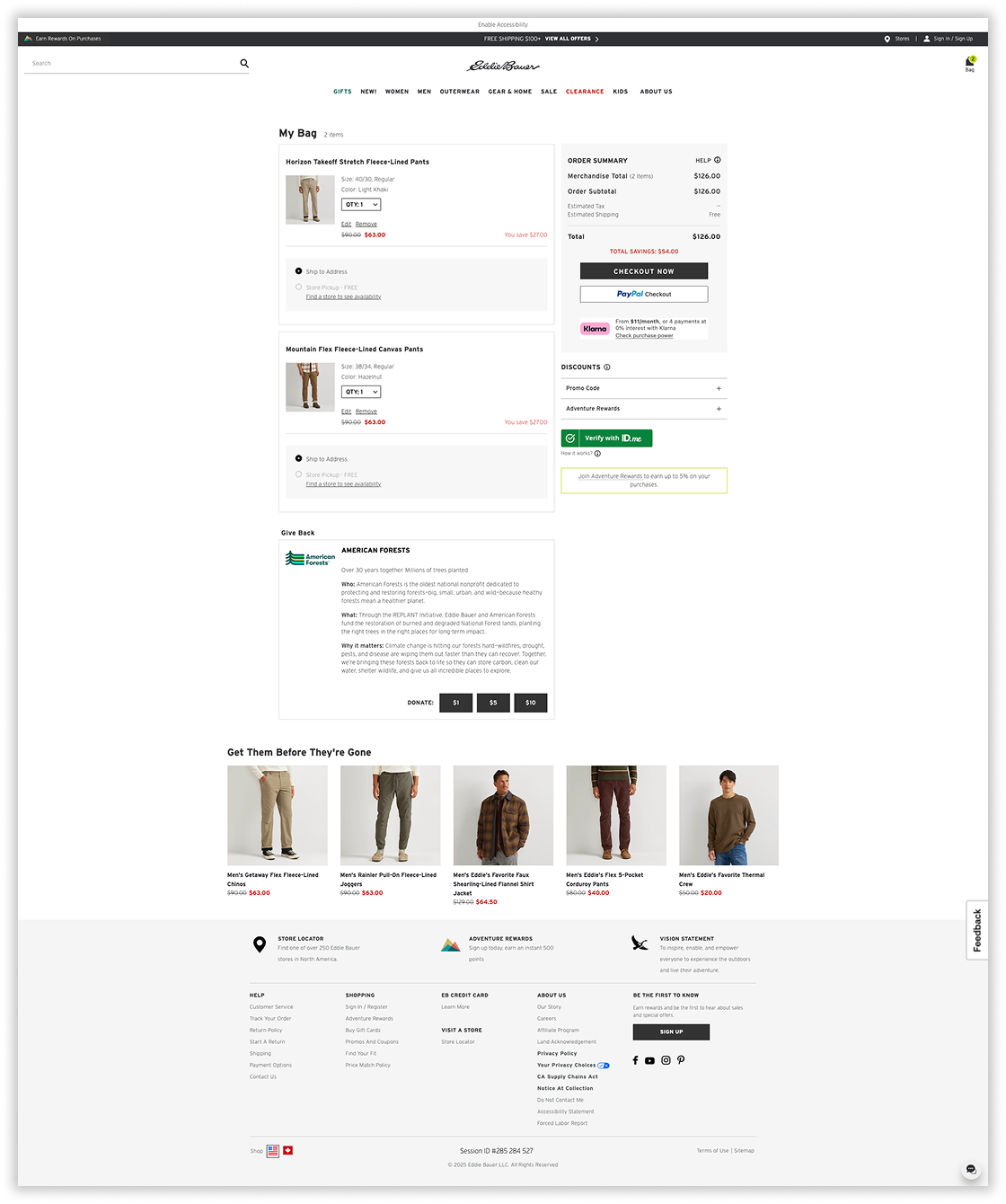
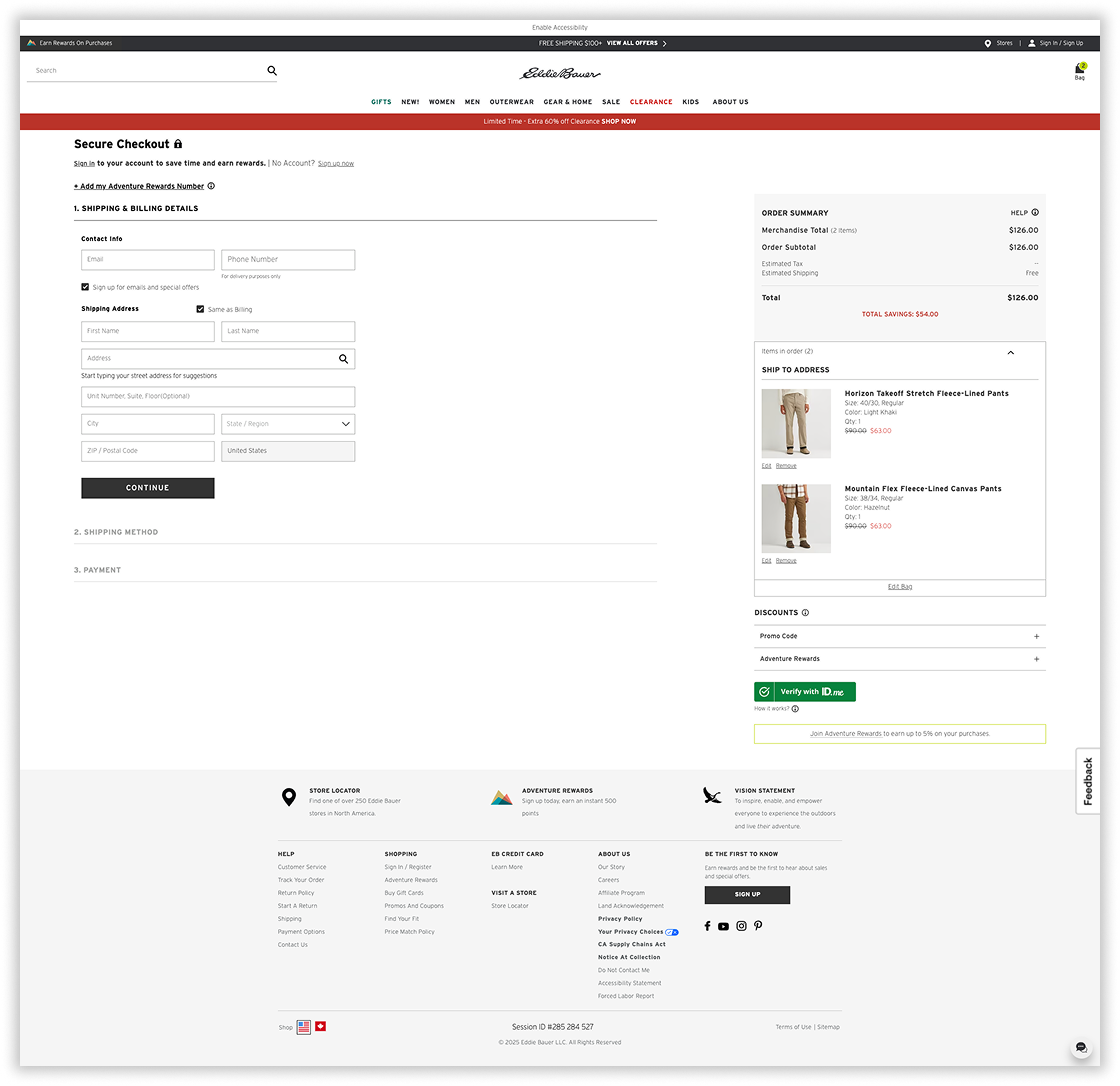
Discover outdoor products and seasonal collections.
01 / 06FROM THE PROJECT FILES
Screens from the shipped product. Values shown are sample data.
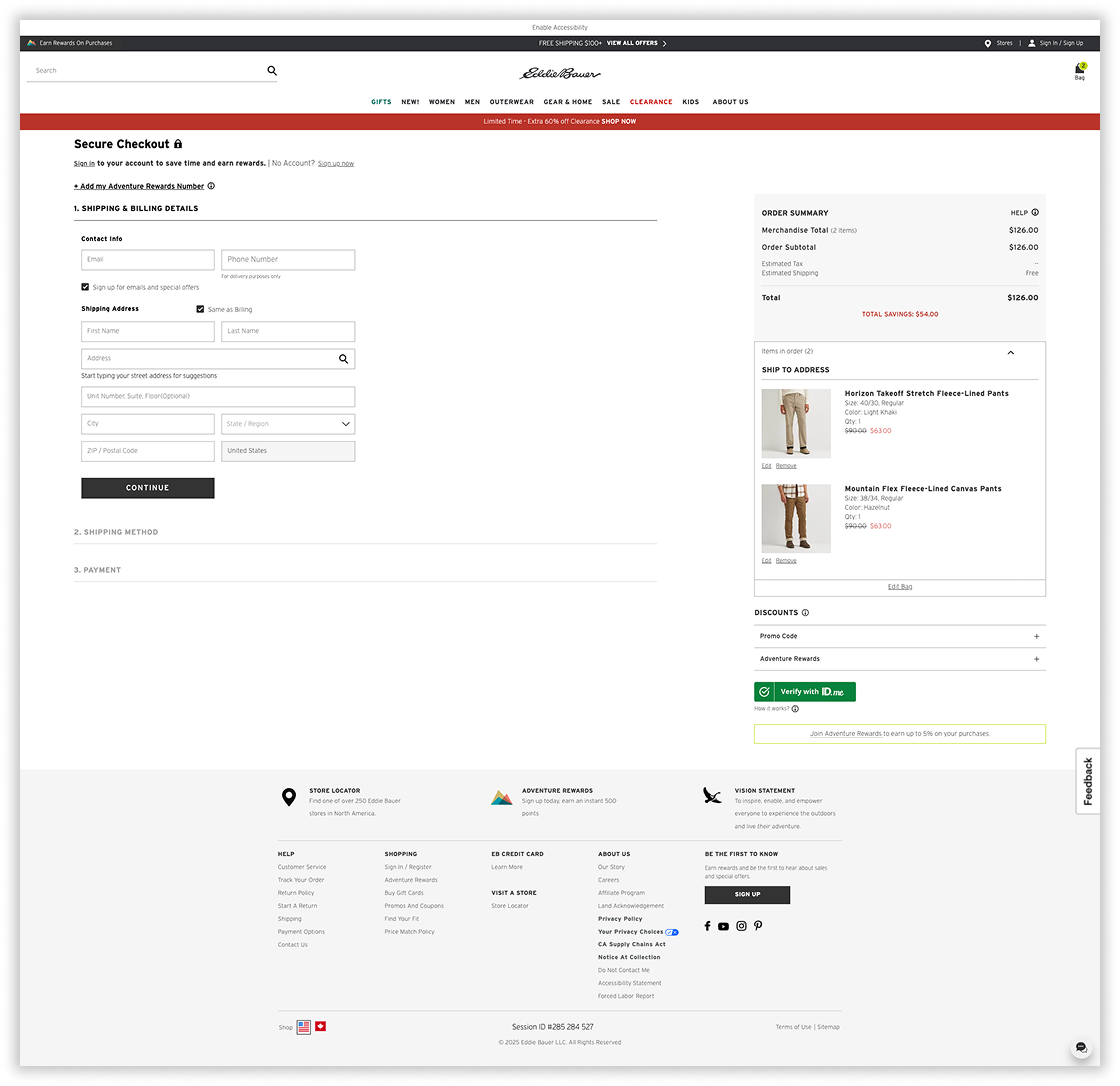
Looking back, I’d carry the selected variant more visibly from product detail into the bag and checkout, so size and colour never have to be re-checked along the way.
LEADERSHIP APPROACH · EXAMPLE SCENARIO
This is the approach I take when a release deadline is fixed. The situation below is an example scenario, not an account of this project; the decision record and critique structure show the method.
A commerce team is preparing a seasonal release. The commercial priority is to improve checkout; engineering capacity is constrained. Design sees a broader opportunity to improve product, sizing and pricing clarity. My job is to help the team choose a defensible first release.
Focus investment where it can support purchase decisions before the seasonal window.
Prefer changes that fit existing components and can be tested and rolled back.
Examine product information and sizing as well as the final checkout steps.
EXAMPLE DECISION RECORD
My part is to make the choice legible, preserve dissent and agree up front on what evidence would change the decision.
OWNERSHIP MODEL
Own release scope and the business decision. Record the accepted trade-off.
Recommend the experience direction, explain alternatives and define interaction quality.
Assess feasibility, dependencies and rollback. Identify delivery constraints early.
Challenge assumptions, define measurement and distinguish findings from hypotheses.
DESIGNER DEVELOPMENT / CRITIQUE TEMPLATE
This critique structure lets the designer own the recommendation while the reasoning stays open to challenge.
What must the customer understand or do here?
What else could work, and which constraint changes the choice?
What does the artifact show, and what still needs research?
Make a recommendation, name the risk and propose the smallest useful test.
A written decision record the whole team can point to, dissent captured rather than lost, and designers who arrive at critique with their own recommendation and an alternative.